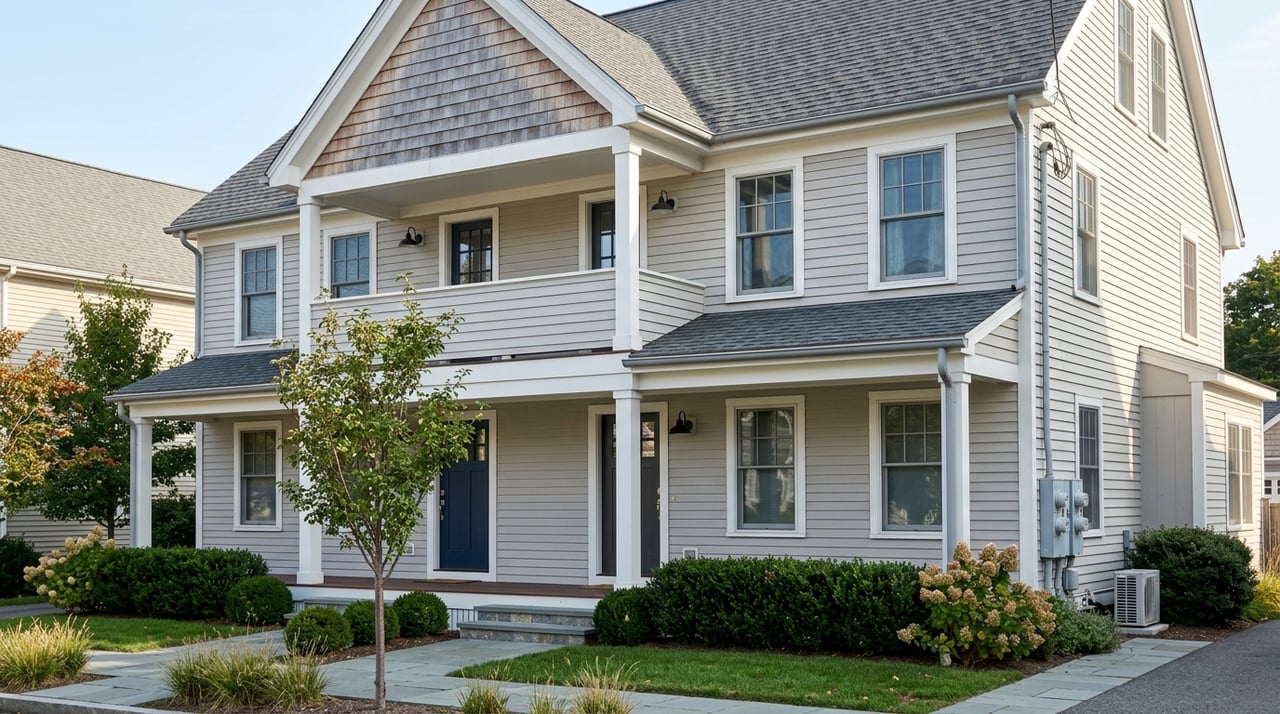
Thinking about buying a 2 to 4 unit property in Stamford? The opportunity can be real, but so can the risk if you rely on a listing description instead of the actual records. If you want to house hack, invest, or buy a small multifamily with more confidence, this checklist will help you focus on the details that matter most before you submit an offer. Let’s dive in.
Start With Legal Unit Count
In Stamford, a small multifamily purchase is often a records-first decision. The city notes that 82.4% of the land is zoned for single-family houses only, so you should never assume a property is a legal 2, 3, or 4 unit just because it is marketed that way. Your offer strategy should be driven by parcel zoning and city records, not by the listing language.
A strong first step is to review the property’s field card, permit history, and certificate of occupancy. Stamford’s Building Department resources explain that the assessor database includes field cards, the municipal search database contains historical permits and certificates of occupancy or completion, and ViewPoint Cloud includes permits issued after October 2013.
You should also confirm the unit count through the deed chain and city records. Stamford provides online land records dating back to 1998, which can help you verify whether the use has been consistently documented over time.
If you see a basement apartment, attic conversion, or an added unit that feels questionable, pause and verify it. Stamford’s zoning permit guidance notes that zoning enforcement investigates illegal conversions and work done without permits, and that tax cards, permits, and certificates of occupancy may help determine whether a use was legal at one point.
Check Zoning Before Pricing
Zoning should shape your underwriting before you get attached to a deal. Stamford specifically states that R-6 allows single-family and two-family detached dwellings but prohibits multiple dwellings, while R-5 allows single-family, two-family, and multifamily dwellings as of right. That distinction matters a lot when you are looking at a 3 or 4 unit property.
Before writing an offer, review Stamford’s zoning regulations and confirm the parcel’s current zoning classification. This is especially important if your plan involves future changes, reconfiguration, or value-add work after closing.
You should also ask whether your intended post-closing work will require a zoning permit. Stamford says zoning permits are required for new buildings, additions, interior changes that affect floor plans, changes in use, and certain accessory structures. Even a use change without structural work may require a standalone zoning permit.
Verify Parking Early
Parking can become a deal problem faster than many buyers expect. Stamford’s residential parking table requires 2 spaces per unit for two-family and three-family houses. For multifamily developments with four or more units and reserved designated parking, the code requires 2 spaces per unit plus 1 guest space for every 4 units.
That means you should not treat parking as a minor checkbox. If the lot layout, driveway, or existing use does not clearly support the required parking, it can affect both legality and your future plans for the property. Review the site with parking requirements in mind before you finalize your numbers.
Review Flood Risk and Site Conditions
If the property is near the water or in a lower-lying part of Stamford, flood risk needs to be part of your pre-offer review. FEMA’s Map Service Center is the official public source for flood hazard information, and Stamford also provides flood zone determination and flood information resources through the city.
Flood exposure can affect insurance costs, renovation scope, and future permitting. Stamford’s building guidance notes that floodplain work may require elevation documentation for the lowest floor, including basements, before vertical construction continues and before final inspection. If flood risk is in play, factor it in early.
Audit the Rent Roll
Once you are comfortable with the legal status of the property, shift to the income side. Ask for the current rent roll, all leases, security deposit records, utility responsibility details, and any notices or violations. Your goal is to confirm that the in-place income is real, documented, and sustainable.
For a quick market screen, you can compare actual rents to HUD’s Small Area Fair Market Rents for ZIP code 06902. For FY2026, HUD lists $2,420 for a 1-bedroom, $2,890 for a 2-bedroom, $3,490 for a 3-bedroom, and $4,140 for a 4-bedroom in 06902.
This is not a substitute for an appraisal or full valuation. It is simply a useful benchmark to help you spot units that may be below market and ask better questions about why. A lower rent could reflect long-term tenancy, unit condition, or legal limitations.
If the building is tenant-occupied, have an attorney review the leases, notices, and any available complaint history before closing. This step becomes even more important when the property includes inherited tenants or nonstandard lease terms.
Inspect Like an Income Property
A 2 to 4 unit property should be inspected differently than a typical single-family home. You are not just evaluating whether the building looks livable today. You are also assessing maintenance risk, code exposure, and future capital needs.
Pay close attention to these items:
- Roof condition
- Foundation and drainage
- Windows and exterior doors
- Decks and stairs
- Heating systems
- Plumbing and electrical systems
- Moisture or pest issues
- Smoke and carbon monoxide protection
- Fire separation between units
- Safe and clear exit paths
According to Stamford’s Building Department, the department enforces Connecticut building, mechanical, electrical, plumbing, and demolition codes along with local ordinances. It also performs plan review, inspections, and code enforcement.
If renovations or visible updates appear recent, verify that the work was permitted and inspected. Stamford specifically flags work without permits and illegal conversions as enforcement issues, which can create cost and timing problems after closing.
For 2 to 4 unit buildings, unit separation and egress deserve extra attention. Stamford’s inspection guidance includes fire-resistance-rated construction between dwelling units and final inspection before occupancy, so these are not details to gloss over.
Build a Conservative Cash-Flow Model
Before you submit an offer, run simple numbers based on today’s reality, not tomorrow’s best-case story. Start with gross scheduled rent, subtract vacancy, operating expenses, reserves, and debt service, and see whether the deal still works. If the property only makes sense with perfect rents and no surprises, it may not be the right deal.
Do not leave taxes out of your first pass. Stamford’s property assessment information explains that real estate tax bills are due July 1 and January 1, become delinquent after 30 days, and are calculated by multiplying the assessment by the mill rate set by the Board of Finance each May.
You should also include closing costs. Stamford’s land records page notes that city and state conveyance taxes are due when a document is recorded.
If you plan to live in one unit, financing options may look different than they would for a pure investment property. HUD states in its FHA handbook that FHA single-family programs are limited to one- to four-family properties that are owner-occupied principal residences, and that the minimum required investment is 3.5% in most cases. You should confirm exact loan terms with your lender.
Use Pre-Offer Gates
The safest buyers treat key due diligence items as pre-offer gates, not issues to sort out later. In Stamford, that means checking the legal unit count, permit history, zoning, parking, flood exposure, taxes, and rent realism before you lock into a number.
A practical pre-offer checklist looks like this:
- Review the assessor database and field card
- Confirm land records and deed history
- Check permits and certificate of occupancy history
- Review zoning regulations and parcel zoning
- Verify parking requirements against the lot
- Check FEMA flood maps if location suggests risk
- Review the full rent roll and leases
- Run a conservative cash-flow model
This process may feel detailed, but it can save you from expensive surprises. In small multifamily, the best deals are often the ones where the paperwork supports the story.
Why Local Guidance Matters
Buying a 2 to 4 unit in Stamford is not just about finding a building with rental income. It is about understanding how city records, zoning, permits, property condition, and operating math fit together. A buyer who gets these pieces right can move with much more confidence.
That is where local, practical guidance helps. If you want help reviewing a Stamford multifamily opportunity, zoning questions, or the numbers behind a potential house-hack or investment purchase, connect with Robbie Salvatore for grounded advice and hands-on support.
FAQs
What should you check first when buying a 2 to 4 unit in Stamford?
- Start with the assessor field card, land records, permit history, certificate of occupancy history, parcel zoning, and flood map status before you focus on price.
Why does zoning matter for a Stamford multifamily purchase?
- Zoning affects whether the property is legally usable as a 2, 3, or 4 unit and whether future changes or renovations may require approvals.
How can you confirm a Stamford property is a legal 2 to 4 unit?
- Review the field card, permits, certificate of occupancy, and land records, and ask zoning enforcement questions if a unit appears to have been added later.
How should you evaluate rents for a 2 to 4 unit in Stamford 06902?
- Compare the current rent roll and leases to HUD Small Area Fair Market Rent data for 06902 as a screening tool, then investigate any major gaps.
Can you use FHA to buy a 2 to 4 unit in Stamford?
- FHA may be an option if you plan to occupy one unit as your principal residence, but you should confirm eligibility and exact loan terms with your lender.
Why is parking important when buying a small multifamily in Stamford?
- Stamford has specific residential parking requirements by property type, so parking can affect compliance, usability, and your renovation or leasing plans.